
Moringa has gone from a regional staple in South Asian and African kitchens to a fixture on wellness shelves worldwide — showing up as loose powder, capsules, and everything in between. Much of that popularity is well earned: this is a genuinely nutrient-dense plant. But it's also picked up a reputation as a cure-all, and that reputation runs ahead of the science. This guide sticks to what's actually known — what moringa contains, why those nutrients matter, and how to fit it into a normal routine — without treating it as a miracle in a jar.
What Is Moringa?
Moringa oleifera is a fast-growing tree native to parts of South Asia, now cultivated widely across tropical and subtropical regions. It's sometimes nicknamed the “miracle tree,” but that's a popular label born from its resilience and nutritional density, not a scientific classification — no plant is a cure-all, moringa included.
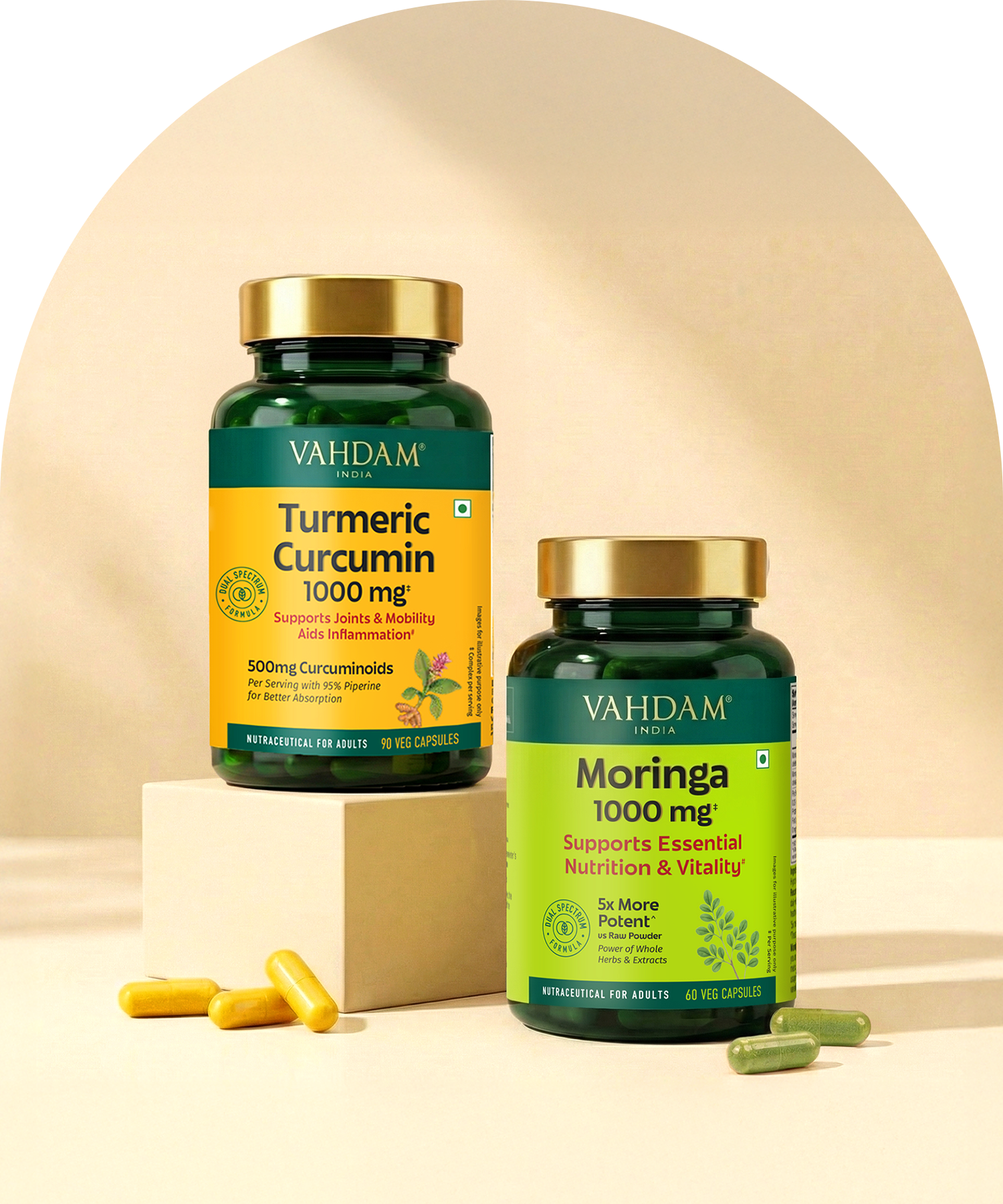
While the tree's pods, seeds, and roots all see some traditional use, it's the leaves that show up in the powders and capsules on supplement shelves. To make moringa powder, fresh leaves are harvested, dried (typically shade-dried, to protect heat-sensitive nutrients), and ground into a fine, deep-green powder. That same dried leaf material can also be encapsulated for a more convenient, tasteless format. Beyond powder and capsules, you'll also find moringa as leaf tea, tablets, and extracts.
How the leaves are grown, harvested, and processed has a real effect on quality. Leaves that are dried quickly at lower temperatures retain more of their vitamin content than leaves that sit too long or are dried at high heat, and sourcing from well-managed farms reduces the risk of contamination — all reasons the same “moringa powder” label can mean very different products depending on the brand.
What's Inside Moringa?
Moringa leaves pack in a wide range of nutrients, and understanding what each one does helps explain why this plant gets so much attention.

Plant protein: Moringa leaves contain a meaningful amount of protein for a leafy plant food, including all nine essential amino acids — the building blocks your body can't produce on its own and must get from food. This is part of what makes moringa unusual among plant-based protein sources.
Fibre: Dietary fibre supports digestion by adding bulk to stool and feeding beneficial gut bacteria, and it plays a role in steadying blood sugar response after meals.
Iron: Iron is essential for producing haemoglobin, the protein in red blood cells that carries oxygen throughout the body. Dried moringa leaves are considered a notably concentrated source of iron compared with many common vegetables, and may contain substantially more iron than spinach, weight for weight (Ullah et al., 2025).
Calcium: Calcium is central to bone health, muscle function, and nerve signalling. Moringa leaves have also been noted for containing more calcium than milk on a like-for-like basis, making the leaf powder a useful option for anyone looking to diversify their calcium sources (Ullah et al., 2025).
Magnesium: This mineral supports muscle and nerve function, energy production, and bone structure.
Potassium: Potassium helps regulate fluid balance and supports normal muscle and nerve function; moringa leaves have been compared favourably to bananas, a food commonly associated with potassium (Ullah et al., 2025).
Vitamin A precursors (beta-carotene): The body converts beta-carotene into vitamin A, which supports vision, skin health, and immune function.
Vitamin E: An antioxidant vitamin that helps protect cell membranes from oxidative damage.
Polyphenols and flavonoids: These are plant compounds — including quercetin and kaempferol, two flavonoids commonly identified in moringa leaves — that contribute to the plant's overall antioxidant activity.
Antioxidants: Broadly, antioxidants help neutralise free radicals, unstable molecules produced through normal metabolism and environmental exposure that can otherwise damage cells over time.
What Is Moringa Good For?
It's worth saying upfront: research into moringa is still developing, and much of what makes it valuable comes down to its nutrient density rather than any single, isolated therapeutic effect. Moringa works best as a way to round out a diet, not as a stand-in for medical treatment or a substitute for other whole foods.

Supporting Everyday Nutrition
Because it concentrates so many nutrients into a small serving, moringa powder can help fill gaps in a diet — particularly for people who don't consistently get enough iron, calcium, or plant protein from their regular meals. Adding a spoonful to an existing balanced diet is a reasonable way to support daily nutritional intake, rather than a replacement for varied whole foods.
Antioxidant Support
Moringa's polyphenol and flavonoid content contributes to measurable antioxidant activity in laboratory studies, helping the body manage oxidative stress at a cellular level. This doesn't translate into a claim about preventing or treating any specific disease — it simply means moringa is one of several plant foods that can contribute antioxidant compounds to the diet.
Supporting Energy Naturally
Moringa contains no caffeine or stimulant compounds, so any sense of increased energy people report isn't a stimulant effect — it's more plausibly linked to iron intake, since adequate iron is necessary for the oxygen transport that underlies normal energy levels. This is a nutritional mechanism, distinct from the immediate stimulant lift you'd get from caffeine.
Immune System Support
Vitamin A, vitamin C, and several of the minerals found in moringa each play established roles in normal immune function. As with most single foods, moringa's contribution here is best understood as one part of an overall varied, balanced diet rather than a standalone immune booster.
Digestive Wellness
The fibre content in moringa leaf powder can support regular digestion and contribute to a healthy gut environment, similar to fibre from other leafy vegetables.
Moringa Benefits for Skin
Vitamin A and vitamin E, along with moringa's antioxidant compounds, support the nutritional building blocks associated with skin health — vitamin A supports normal cell turnover, and vitamin E helps protect skin cells from oxidative damage. This is a nutritional contribution, not a guarantee of visibly clearer or younger-looking skin, which depends on far more than diet alone, including genetics, skincare routine, sun exposure, and sleep.
Moringa Benefits for Hair
Hair is largely made of protein, so adequate protein intake — which moringa can help support — along with iron, matters for healthy hair growth cycles. That said, hair growth and hair health are influenced by a wide range of factors beyond nutrition, including genetics, hormones, stress, and scalp care, so moringa should be seen as one supporting piece rather than a direct hair-growth solution.
Moringa Benefits for Women
Iron and calcium are two nutrients that women, in particular, often need to pay closer attention to across different life stages, and moringa's concentration of both makes it a convenient addition for busy routines. Beyond these specific nutrients, moringa's overall contribution for women is best framed as general wellness support rather than a hormone-balancing solution — that claim isn't backed by strong enough evidence to make confidently.
Moringa Benefits for Men
Moringa's density of protein, iron, and other micronutrients makes it a convenient addition for active lifestyles and general nutritional support. It's not a muscle-building or testosterone-boosting supplement — those outcomes depend on training, overall diet, and other factors well beyond what any single leafy green can provide.
Moringa Powder vs Moringa Capsules: Which Should You Choose?
| Feature | Powder | Capsules |
|---|---|---|
| Best for | Smoothies, drinks, recipes | Convenience, travel |
| Taste | Earthy | Tasteless |
| Preparation | Requires mixing | Ready to take |
| Serving flexibility | High | Fixed servings |
| Lifestyle | Home use | On-the-go |
Powder gives you more control — you can adjust the amount, blend it into food and drinks, and get more moringa per rupee spent. Moringa capsules trade some of that flexibility for convenience: no taste to mask, no measuring, and easy to carry when travelling or at work. Neither format is nutritionally superior if both are made from the same quality leaves — the difference comes down to which fits more easily into your daily routine.
What's the Best Way to Take Moringa?
Moringa powder is versatile enough to work into most meals and drinks:
- Smoothies — blends easily with fruit to mask the earthy flavour
- Morning drinks — stirred into warm water with lemon or honey
- Tea — steeped on its own or blended with other herbal teas
- Oats — stirred into warm or overnight oats
- Yogurt — mixed in for a nutrient boost at breakfast
- Soups — stirred in toward the end of cooking to preserve nutrients
- Salad dressings — whisked into oil-based dressings
- Capsules — for a no-prep, on-the-go option
Consistency matters more than quantity here. A small daily serving, taken regularly as part of a balanced diet, is a more sustainable and reasonable approach than a large one-off dose. Always follow the serving size recommended on your specific product's packaging.
How to Choose High-Quality Moringa
A few practical markers can help you judge quality:
- Leaf source: Look for transparency about where and how the moringa was grown.
- Colour: A vibrant, deep green typically suggests careful drying at lower temperatures; a dull, brownish powder may indicate nutrient loss from overheating or age.
- Aroma: Fresh moringa powder has a mild, grassy, slightly earthy smell — a musty or stale smell is a red flag.
- Texture: A fine, consistent powder (free of grit or clumping) usually reflects better processing.
- Processing methods: Shade-drying at controlled, lower temperatures generally preserves more nutrients than high-heat drying.
- Ingredient transparency: Check for clear labelling with no unnecessary fillers or additives.
- Third-party testing: Independent lab testing for contaminants like heavy metals adds a meaningful layer of quality assurance.
- Powder vs capsule quality indicators: For capsules, check that the capsule material and any fillers are clearly listed, since quality control here is less visible than with loose powder.
Common Myths About Moringa
“Moringa is a miracle cure.” It's a nutrient-dense plant food, not a treatment for any specific medical condition.
“Powder is better than capsules.” Nutritionally, they're comparable when sourced from the same quality leaves — the better choice depends on your routine, not the nutrient content.
“You need large servings to see benefits.” Consistent, moderate daily servings — in line with product recommendations — are a more reasonable and sustainable approach than large doses.
“All moringa products are the same.” Growing conditions, harvest timing, drying method, and storage all affect the nutrient content and quality of the final product.
“Moringa works instantly.” Like most nutritional additions, any benefit builds gradually through consistent use as part of an overall balanced diet, not overnight.
Frequently Asked Questions
What is moringa?
Moringa oleifera is a tree whose leaves are dried and ground into a nutrient-dense powder, commonly used as a dietary supplement in powder, capsule, or tea form.
What is moringa good for?
It's primarily valued for its concentration of plant protein, iron, calcium, and antioxidant compounds, which can help support everyday nutrition as part of a balanced diet.
Is moringa powder better than capsules?
Not nutritionally — when made from comparable quality leaves, the two formats offer similar nutrient content. The better option depends on your lifestyle and preferences.
Can you take moringa every day?
Yes, moringa is commonly taken daily in moderate servings as part of a regular diet, following the serving guidance on the specific product.
Does moringa support healthy skin?
Its vitamin A, vitamin E, and antioxidant content contribute nutritionally to skin health, though it isn't a guaranteed treatment for specific skin concerns.
Can moringa support healthy hair?
Its protein and iron content support the general nutritional foundation for hair health, but hair growth depends on many additional factors beyond diet.
Is moringa high in protein?
Yes, relative to most leafy greens, moringa leaves contain a notable amount of protein, including all nine essential amino acids.
When is the best time to take moringa?
There's no single required time — many people take it in the morning mixed into a drink or smoothie, though consistency matters more than timing.
How should moringa be stored?
Keep moringa powder in an airtight container away from light, heat, and moisture, and use it within the timeframe recommended on the packaging to preserve its nutrient content.
References
Ullah, M. Z., Islam, M. S., & Parvin, E. (2025). Determination of proximate and mineral composition of Moringa oleifera leaves and pods. Trends in Biological Sciences, 1(4), 285–294. https://doi.org/10.21124/tbs.2025.285.294
Hassan, M. A., Xu, T., Tian, Y., Zhong, Y., Ali, F. A. Z., Yang, X., & Lu, B. (2021). Health benefits and phenolic compounds of Moringa oleifera leaves: A comprehensive review. Phytomedicine, 93, 153771. https://doi.org/10.1016/j.phymed.2021.153771
National Institutes of Health, Office of Dietary Supplements. (2022). Iron: Fact sheet for health professionals. https://ods.od.nih.gov/factsheets/Iron-HealthProfessional/
National Institutes of Health, Office of Dietary Supplements. (2024). Vitamin A: Fact sheet for health professionals. https://ods.od.nih.gov/factsheets/VitaminA-HealthProfessional/
Anderson, J. W., Baird, P., Davis, R. H., Jr., Ferreri, S., Knudtson, M., Koraym, A., Waters, V., & Williams, C. L. (2009). Health benefits of dietary fiber. Nutrition Reviews, 67(4), 188–205. https://doi.org/10.1111/j.1753-4887.2009.00189.x
National Institutes of Health, Office of Dietary Supplements. (2021). Vitamin E: Fact sheet for health professionals. https://ods.od.nih.gov/factsheets/VitaminE-HealthProfessional/
Guo, E. L., & Katta, R. (2017). Diet and hair loss: Effects of nutrient deficiency and supplement use. Dermatology Practical & Conceptual, 7(1), 1–10. https://doi.org/10.5826/dpc.0701a01


Leave a comment
This site is protected by hCaptcha and the hCaptcha Privacy Policy and Terms of Service apply.